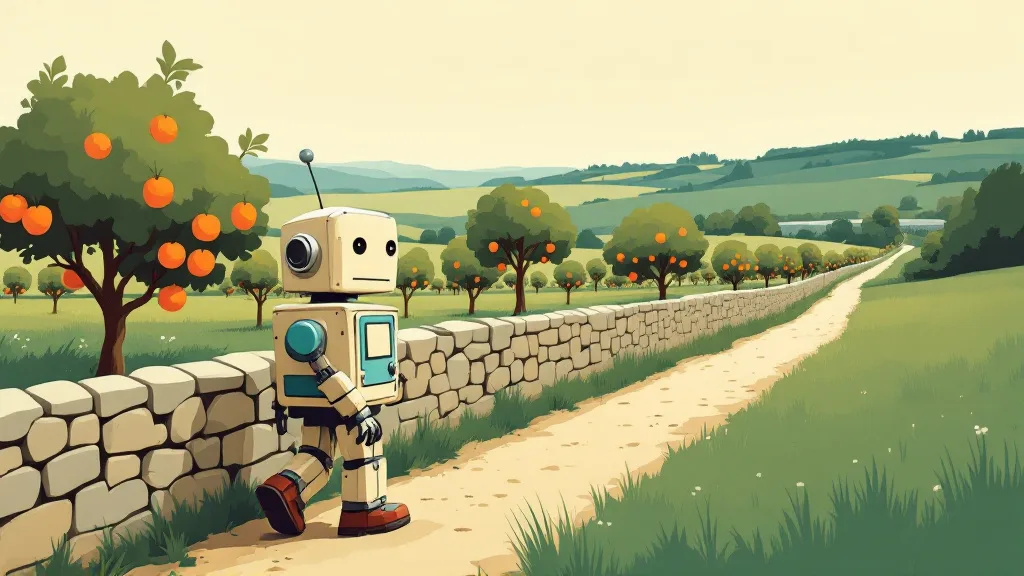
This blog is made with AI, and we said so in public before most people were comfortable saying it. A few weeks and about twenty posts later, we know more about what an AI content workflow is actually like to run than we did when we argued for one. Some of it went the way we expected. The part that failed most often was the part we expected to be easy: the pictures.
How the workflow is set up
There are three stages, and we keep them separate on purpose. First, topics. A batch of proposed topics is assembled from the news sources we follow and the questions owners actually ask us, and a person approves or rejects every one. Nothing gets written about a topic nobody signed off on. That's the only point where approval happens, so it's where we spend our attention.
Second, production. An approved topic gets its web address fixed first, then a cover illustration, then a draft. Third, publishing, which is purely mechanical: approved posts go live on a set schedule, three a week, with no one pressing a button.
We should be clear about what that means. After a topic is approved, there's no second sign-off on the finished post. What stands in for one is a written standard that every draft and every cover has to pass, and a set of checks that enforce the parts of it a machine can check. We wrote about why the system around a model matters more than the model itself in our piece on the harness. This blog is that idea, applied to ourselves.
What held up
Approving topics, not posts. This was the best decision we made. Judgement belongs at the start, where it's cheap: rejecting a weak topic costs a click, while rescuing a weak post costs an afternoon. And because topics are approved in a batch, the blog has a shape over a month instead of whatever seemed interesting that morning.
Fixing the address before writing. A post's web address is where everything it earns, links and rankings alike, accumulates, so changing it later throws some of that away. Before anything is drafted, we check how people actually phrase the question and put that phrasing in the address. More than once the topic we approved and the words people search for turned out to be different, and the post was better for knowing it early.
Rules a machine can enforce. Every draft goes through an automated check before it's allowed near the site: we write as "we", never in the first person singular; no dollar figures; no names of tools we use for clients; a length range; at least two links to earlier posts where they genuinely help; and every search field filled in. None of this is clever. All of it has caught something.
The checks that earned their keep weren't the clever ones. They were the boring ones that run every single time.
What kept failing: the cover art
Each post gets an illustration in one locked style, and each one is generated, then inspected against five tests before it's accepted: the right characters, no lettering anywhere, the right palette, the right style, and a scene that actually reads as the idea. There's a budget of five attempts. The cover on this post used all five.
Image models fail in ways that are hard to predict and easy to recognise afterwards. A few of the lessons we wrote into the standard:
Naming what you don't want summons it. Asking for a room with "no boxes" produced a room full of boxes. Describe the empty space instead.
A colour that is also a thing becomes the thing. Ask for something in a fruit-coloured shade and you may get the fruit.
Rooms breed lettering. Indoor scenes fill up with shelves, jars and signs, and every one of them sprouts gibberish text. Open landscapes almost never do.
Look closer than feels necessary. Fake lettering on a tiny panel is invisible at normal size. Inspecting every cover in zoomed halves caught text that a quick look had passed.
One post missed its slot entirely because its cover failed every attempt. It shipped later with a different idea for the picture. That's the standard working, not failing: a late post is better than a post with a broken image.
What surprised us
The hardest rule to keep wasn't about AI at all. It was about honesty in describing our own process. On one of our own pages we once described a free report as done by hand, when in fact a scheduled job drafts it and a person reviews it. Nobody meant to mislead, but it was a claim and it wasn't true, so it's now an explicit rule: describe the real process or don't describe it. It's the same line we drew when we wrote about whether Google penalizes AI content, where the answer was that the penalty is for empty content at volume, not for the tool.
The other surprise was how much of the work is noticing when something quietly stops. Scheduled jobs report in every time they run, and if one goes missing, a person gets an email. That's the unglamorous half of any automated system, and we made the same point about AI assistants in what an "AI employee" actually is.
What we don't know yet
It's too early to say anything about traffic or results, and we'd be lying if we pretended otherwise. A few weeks of posts is not a track record. What we can say is that the workflow produces work we're willing to put our name on, at a pace we can sustain, and that every failure so far has turned into a rule rather than a repeat.
If you're building your own version, start where we'd start again: decide who approves topics, write the standard down, and automate the boring checks first. And if you want to know whether AI assistants can actually read and cite what you publish, run the twenty-second scan on your own site.