Here is an argument that makes some people uncomfortable: most of the great content published this year will have been made with AI somewhere in the process. Not because the machines have taste, but because the work of turning an idea into a finished piece — drafting, restructuring, tightening, formatting, illustrating — is exactly what the tools have become good at.
The uncomfortable part is also the useful part. If production is no longer the hard bit, then what separates great content from the flood of forgettable content is everything production never was: knowing something worth saying, and deciding what not to publish.
Does Google penalize AI content?
It is the question we hear most, so it deserves a direct answer. Google's published position is that it rewards helpful, reliable content however it was produced, and that using AI is not in itself against its guidelines. What its spam policies do target is producing large amounts of content mainly to manipulate search rankings rather than to help anyone — what it calls scaled content abuse — and that applies whether the pages were written by a machine, a person, or a room full of people.
So the honest answer is that Google does not penalize AI content. It penalizes unhelpful content at scale, and AI happens to make that very cheap to produce. The penalty was always for the flood, not for the tool.
AI made content cheap. It did nothing to make judgment cheap, and judgment is what anyone is actually reading for.
What AI changes, and what it doesn't
AI changes the economics of the blank page. A first draft that took an afternoon takes minutes. An idea can be tried in three structures and the best one kept. A post can have an illustration that would never have had the budget for one. That is a real and permanent shift, and refusing to use it is not a principled stand; it is just slower.
What AI does not change is where the value comes from. It cannot know what your customers keep asking, what went wrong on the last project, or what years of doing the work have taught you. It does not know which of your opinions are worth defending in public. Without that input it produces smooth, correct, empty text of the kind that already fills most of the internet — and readers, and search engines, are getting very good at recognising it.
The line we hold on this blog
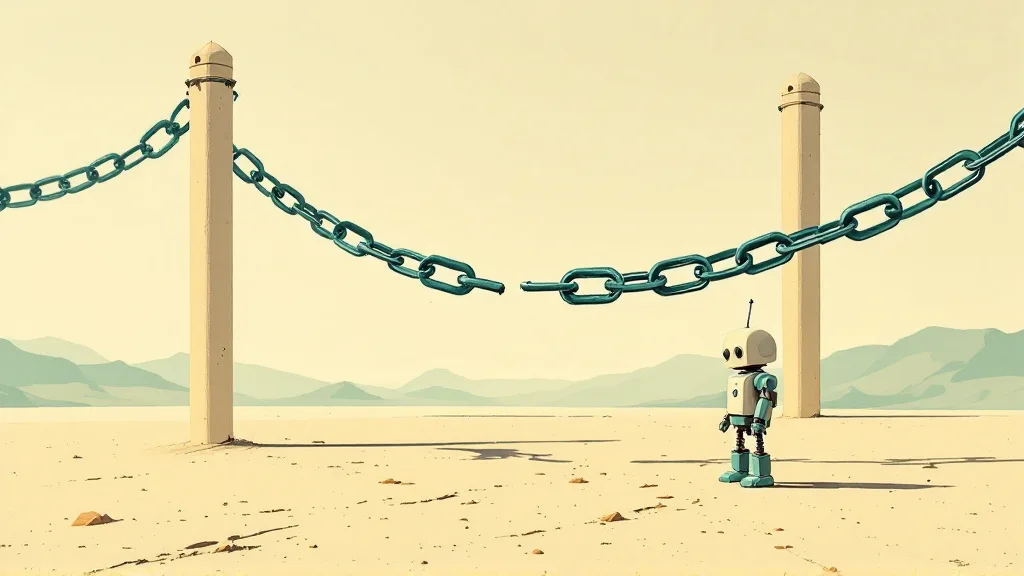
Since we are making the argument, we should show our own work. This blog is produced with AI. Every topic is chosen by us, based on what we know and what the businesses we work with need to hear. Drafts are produced with AI assistance and have to pass a written standard before anything publishes: our voice, no invented claims, no client figures, links that genuinely help the reader, and clear rules about what we will and won't say. The cover illustrations are generated and then checked too, as we described in our piece on why the system around a model matters more than the model.
What we will not do is publish at volume for its own sake. A handful of pieces that say something beats a hundred that say nothing, both for the people reading and for the only penalty that actually exists.
What this means for your business
If you publish anything — a blog, product pages, social posts, a newsletter — the practical takeaways are straightforward. Use AI for production, and spend your own effort on the parts it cannot do: the first-hand knowledge, the specific examples, the opinion. Decide your line on disclosure and keep to it. And judge your content by whether it is useful, not by how much of it there is.
If you are just getting started, the habits that make AI genuinely useful apply to writing as much as to anything else. And if you want your content to be something AI tools can actually find and cite, that depends on how your site is built as much as on what is on it — which is one of the reasons behind THINQ Site. We are always happy to help you find out in twenty seconds whether AI assistants can read your site.